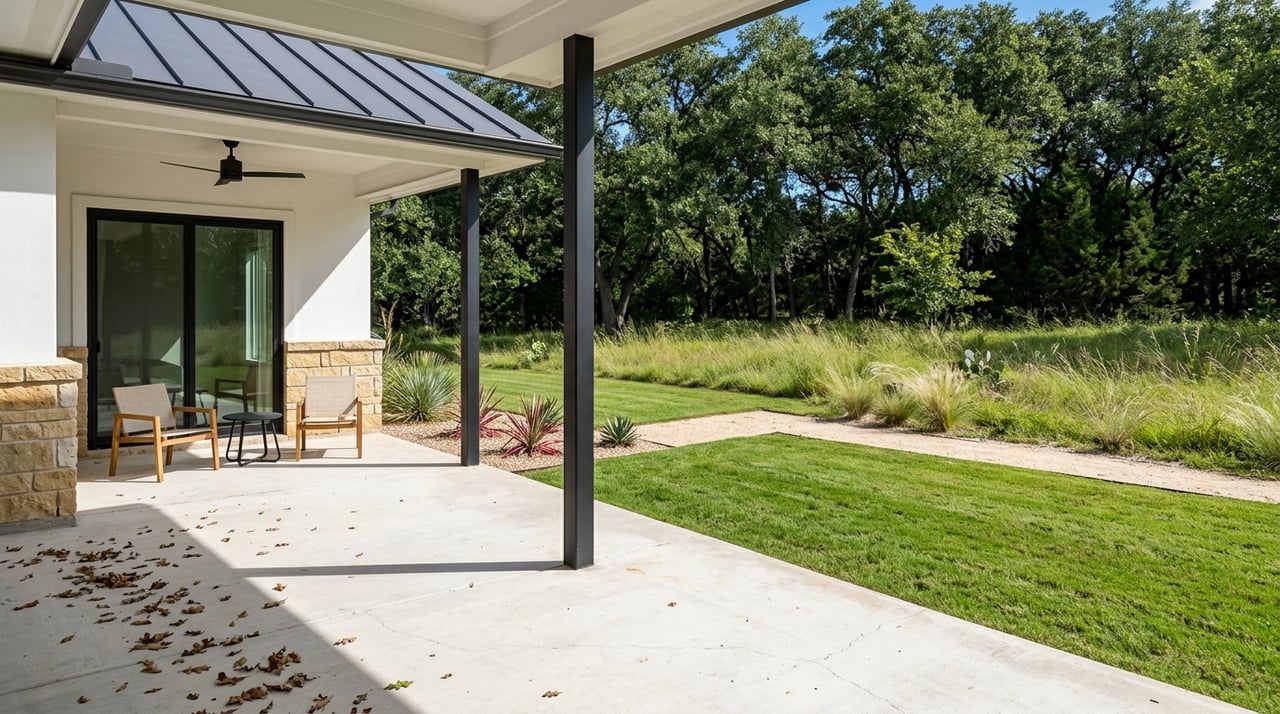
Wondering whether you should choose a few acres or a neighborhood home in Dripping Springs or Driftwood? It is one of the biggest lifestyle decisions buyers face in this part of Hays County, because the right fit is about more than square footage or price. If you are weighing privacy, amenities, commute patterns, and long-term upkeep, this guide will help you compare the real trade-offs so you can move forward with more confidence. Let’s dive in.
Why this choice matters here
Dripping Springs and Driftwood may be close to Austin, but they do not offer the same living experience. Both sit west of the metro along US 290, and route-estimate tools often place the drive to Austin at about 35 minutes under typical traffic. In real life, your commute can vary based on where you live, what time you leave, and traffic conditions along US 290.
That variability matters because your day-to-day lifestyle can feel very different depending on whether you are tucked into a planned community or living on a larger tract. Driftwood, in particular, still reflects its rural roots as a historic supply center for nearby ranches and farms. That countryside character is a big reason many buyers look there when they want more space and privacy.
Acreage living in Dripping Springs and Driftwood
If you picture room to spread out, acreage may be the better fit. Larger properties often appeal to buyers who want separation from neighbors, space for animals or outbuildings, and a home site that feels more independent. In Driftwood especially, that rural feel is part of the draw.
The trade-off is that acreage usually requires more hands-on research before you buy. In Hays County, permits are required for development work including houses, pools, sheds, outbuildings, grading, fill, and creek crossings. That means the flexibility of owning land often comes with more responsibility and more property-specific due diligence.
What buyers like about acreage
Acreage can be a strong match if you want:
- More privacy
- Greater distance from neighbors
- Room for outdoor projects or structures
- A more rural setting
- Fewer neighborhood-style constraints on the overall feel of the property
What to check before buying acreage
The biggest questions are often not visible from the driveway. Utility service, wastewater setup, fire access, and nearby land use can all affect how a property functions over time.
In Hays County, septic is a major item to verify early. The county requires permits for new on-site sewage facility systems, replacements, and alterations. If a property uses an aerobic system, ongoing maintenance with a licensed provider is also required.
Land use is another important consideration. Hays County states that outside the San Marcos Regional Airport zoning area, it does not have zoning authority, which can make nearby land use less predictable than in a typical planned suburb. If long-term surroundings matter to you, that is worth reviewing closely before closing.
Fire protection and access also deserve attention. County fire plan review includes items such as fire access roads, hydrant locations, or documentation for water supply and fire flow. Hays County emergency messaging also warns that high winds and dry fuels can increase wildfire risk, so buyers should view water access and defensible planning as part of ownership, not just a one-time purchase detail.
Neighborhood living in Dripping Springs and Driftwood
If you prefer convenience and a more structured setting, a planned neighborhood may make more sense. In Dripping Springs and Driftwood, many communities offer a built-in lifestyle with shared spaces, trails, recreation features, and a more predictable look and feel. That can be especially appealing if you want less land-management work on your to-do list.
Examples in the area show how amenity-rich this side of the market can be. Headwaters includes a residential master association and amenities such as a fitness center, resort-style split-level pool, water playscape, parks, preserved open space, and more than eight miles of trails. Caliterra highlights extensive green space, trails, Onion Creek paths, picnic areas, and a fishing dock, while Driftwood Golf & Ranch Club offers golf, trails, racquet sports, dining, and other club-style features.
The City of Dripping Springs’ parks, recreation, and open-space master plan also reflects how broad the amenity mix has become across area communities. Its inventory includes features such as trails, pools, dog parks, picnic areas, pavilions, gyms, basketball, pickleball, splash pads, and fishing spots in neighborhoods like Belterra, Caliterra, Headwaters, Highpointe, Arrowhead, Parten, Reunion Ranch, Ledgestone, Goldenwood West, Hidden Springs, and Big Sky.
What buyers like about neighborhoods
Neighborhood living often appeals if you want:
- Shared amenities close to home
- More predictable community appearance
- Common-area maintenance handled through the neighborhood structure
- A more neighborhood-centered daily routine
- Less property upkeep than a large tract may require
What to review in a planned community
That convenience comes with its own trade-offs. Planned neighborhoods usually offer less privacy and less independence than acreage, even when homesites are generous. You are often exchanging open-ended flexibility for a more managed environment.
Before you commit, review the HOA or master-association rules, amenity access, and recurring assessments. Those details shape the ownership experience just as much as the floor plan does. A neighborhood with great amenities may still be the wrong fit if the governance structure does not align with how you want to live.
Utilities can change the answer
In this area, utility verification is one of the most important steps you can take. You should not assume that water or wastewater service works the same way from one property to the next, even when homes are relatively close together. This is one of the biggest reasons acreage and neighborhood homes can feel so different in practice.
The City of Dripping Springs says it currently provides water and wastewater service only for Driftwood Golf and Ranch and Cannon Ranch. For other properties, buyers are directed to the Public Utility Commission water-utility map or Dripping Springs Water Supply Corporation. DSWSC also notes that it serves a defined certificated service area, so checking service maps matters before you assume a tract has the utility setup you want.
Watering rules can differ too. Based on the latest posted notices from each provider, city water customers are under Stage 2 watering restrictions, while DSWSC is under Stage 4 restrictions, allowing only hand-held hose irrigation and prohibiting drip or automatic irrigation. If landscaping, gardening, or outdoor maintenance is important to you, this can meaningfully affect your day-to-day expectations.
Commute and access deserve a hard look
Many buyers start with a lifestyle vision and only later think through the transportation side. That can be risky in Dripping Springs and Driftwood, where access and traffic patterns can shape your routine as much as the property itself. A home that feels perfect on a weekend showing may feel different after a month of weekday driving.
Route-estimate tools often put both Dripping Springs and Driftwood about 35 minutes from Austin under typical traffic, but that number is only a baseline. TxDOT says the US 290 corridor from Oak Hill to Dripping Springs is still under long-term study for safety and mobility improvements, and the Oak Hill Parkway project is ongoing through 2026. TxDOT also reports that the crash rate in the study area is more than 86% higher than the statewide average for rural corridors.
That does not automatically make one location better than another, but it does mean you should test the drive in real conditions if commute time matters to you. Your exact origin point, access to main roads, and travel windows can make a noticeable difference.
How to choose the better fit
For many buyers, the choice comes down to how you want to spend your time. Acreage often fits buyers who value privacy, land, and more control over the property, and who are comfortable doing extra homework on septic, water, fire access, and surrounding land use. Neighborhood living tends to fit buyers who want a more convenient setup, visible amenities, and fewer land-management responsibilities.
A simple way to compare your options is to ask yourself which trade-offs feel easier. If you would rather manage more property in exchange for space and independence, acreage may be the better path. If you would rather trade some privacy for convenience, consistency, and community amenities, a planned neighborhood may suit you better.
Four things to verify on every property
No matter which direction you lean, confirm these details before making a decision:
- Water source
- Wastewater or septic setup
- Road and fire access
- HOA or association rules
In Dripping Springs and Driftwood, those items can matter just as much as the house itself. Two homes with similar price points can come with very different ownership expectations once utilities, restrictions, and access are fully understood.
If you are sorting through acreage tracts, neighborhood resales, or a relocation move into the Hill Country, having a local guide can save you time and help you ask better questions early. Reinae Kessler offers hands-on buyer guidance rooted in local context, so you can compare properties with a clear view of how they may work for your lifestyle.
FAQs
Is acreage living in Driftwood better for privacy?
- Acreage properties often offer more separation from neighbors and a more rural feel, which many buyers associate with greater privacy.
What should you verify before buying acreage in Hays County?
- You should verify the water source, septic or wastewater setup, road and fire access, and any county permit requirements tied to future improvements.
Do planned neighborhoods in Dripping Springs have amenities?
- Many do, with features in area communities that may include trails, pools, parks, dog parks, fitness spaces, picnic areas, and other shared recreation features.
Are water restrictions the same across Dripping Springs and Driftwood properties?
- No, watering rules can vary by utility provider, so you need to confirm which provider serves a property and what current restrictions apply.
How long does it take to drive from Dripping Springs or Driftwood to Austin?
- Route-estimate tools often show about 35 minutes under typical traffic, but your real commute can vary based on exact location, time of day, and congestion on US 290.
Are HOA rules important when comparing neighborhood homes in Dripping Springs?
- Yes, HOA or master-association rules, amenity access, and ongoing assessments can significantly affect your ownership experience.